

FAQ's On Spray Foam Removal
Spray foam insulation was once a popular energy-saving option, but today it causes serious problems for homeowners. From mortgage refusals and hidden timber damage to condensation and fire risks, more people are now turning to professional spray foam removal.

This guide answers the most common questions about removing spray foam insulation, including costs, methods, and what mortgage lenders require.
What Is Spray Foam Removal?
Spray foam removal is the process of taking out previously installed spray polyurethane foam (SPF) insulation. This may involve specialized hand tools to safely remove the material from the loft area.
Why Would Spray Foam Need To Be Removed?
Spray foam insulation often hides more problems than it solves. While it may have been installed to improve efficiency, there are several reasons why removal is now strongly recommended:
Hidden Damage
Spray foam covers beams and battens, meaning you can’t see what’s happening underneath. This makes it impossible to detect early signs of moisture, leaks, or rot until major damage has already occurred.
Lack of Breathability
Unlike traditional insulation, spray foam does not allow your roof to breathe. This can lead to condensation buildup, which over time results in dry rot, mold growth, and structural decay.
Mortgage & Lending Restrictions
Many lenders have updated their policies and will not approve mortgages or remortgages on properties with spray foam insulation. This also applies to equity release, where providers often refuse applications if spray foam is present.
Fire Risk:
Spray foam is highly flammable. If ignited, it can spread fire quickly, putting the property and its occupants at much greater risk.
Timber Damage
By sealing timber completely, spray foam prevents natural airflow. This creates conditions where roof timbers rot from the inside out, often hidden until serious damage has occurred.
Hazardous Materials
Spray foam contains isocyanates, a chemical known to irritate the eyes, skin, respiratory system, and digestive tract. Long-term exposure during installation or disturbance can pose health risks.
Resale & Moving Home
Because of the issues above, homeowners with spray foam insulation often find it difficult to sell their property. Buyers, lenders, and surveyors now treat spray foam as a red flag.
What Is The Difference Between Open-Cell And Closed-Cell Spray Foam Removal?
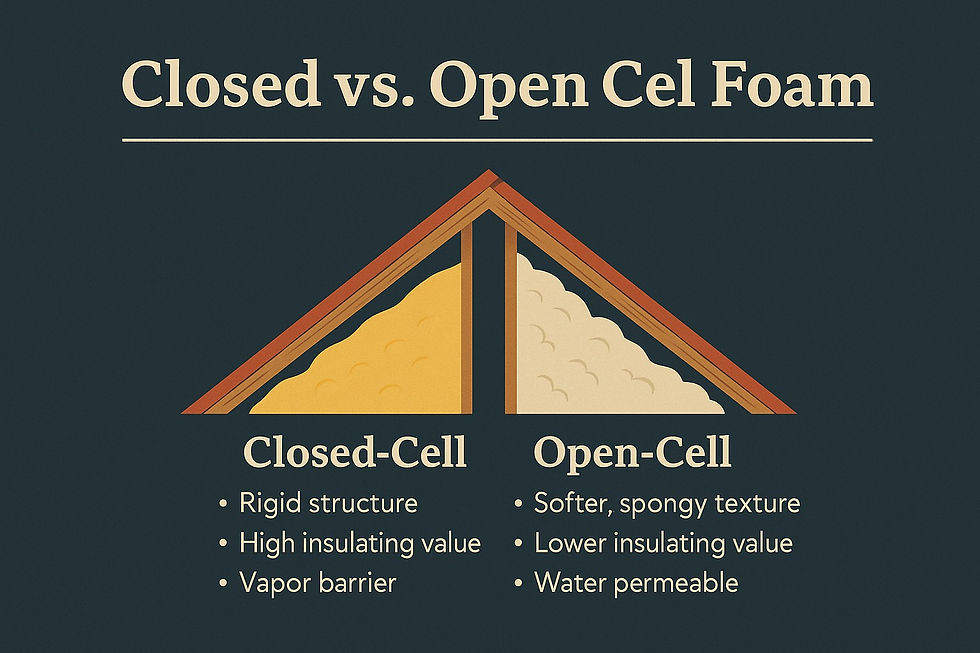
Open-Cell Spray Foam
Softer, lighter, and spongier in texture
Less dense, which makes it easier to cut or scrape away during removal
More breathable than closed-cell, but still restricts airflow compared to traditional insulation
Closed-Cell Spray Foam
Much denser and more rigid than open-cell
Provides a tighter seal and higher insulation value (R-value)
Far more difficult to remove, often requiring power tools
Can I Remove Spray Foam Myself?
We strongly do not recommend DIY spray foam removal. While it might be possible to scrape away small patches, a full removal requires professional expertise for several important reasons:

Specialist Tools & Techniques
Spray foam is bonded tightly to roof timbers and other structures. Professionals use specialist tools and methods tailored to each loft to ensure safe and effective removal.
Trained Removal Teams
Every property is different, and trained technicians know how to adapt their approach without causing unnecessary damage.
Surveyor Standards
Spray foam removal must meet the surveyor requirements of at least 95% removal, which allows for only minimal residue. This is the industry standard that DIY removal cannot usually achieve.
Certification for Mortgage Lenders
After removal, you will receive a certificate of removal, a damage report (even if no damage is found), and a cover letter confirming compliance. These documents are often essential for mortgage lenders or equity release providers. Without them, you cannot prove the foam has been properly and safely removed.
✅ Bottom line: While you might be tempted to try it yourself, only a professional company can provide the level of removal and certification required to protect your property value and satisfy mortgage providers.
How Is Spray Foam Removed?
Spray foam insulation is removed using specialist hand tools designed specifically for the job. This method allows technicians to carefully strip the foam from your loft while avoiding unnecessary damage to the roof structure, beams, or timbers.
Because every loft is different, removal teams tailor their approach to the property, working methodically to achieve the industry-standard 95% removal rate. This ensures that the foam is effectively taken out while protecting the integrity of the roof.
Can You Remove Closed-Cell Spray Foam?
Yes — closed-cell spray foam can be removed, despite the common myth that it always requires a full re-roof.
Closed-cell spray foam is the hardest type to remove because it is denser and bonds more tightly to timbers. It is most often found in older installations. However, with the right specialist hand tools and expertise, it can be carefully removed to meet the surveyor’s required tolerance (minimum 95% removal).
While there is a possibility of uncovering hidden damage during removal, this is rare. Thanks to our extensive experience, we have strict protocols in place to minimise risk and protect your roof structure. If damage is discovered, we will always pause the removal, assess the situation, and contact you directly to discuss the next steps before proceeding.
Closed-cell spray foam does not mean you’re stuck with a costly re-roof. With professional removal, it can be safely taken out while keeping your roof intact and compliant with surveyor and lender requirements.
How Much Does Spray Foam Removal Cost?

The cost of spray foam removal can vary depending on several factors, including:
Type of spray foam (open-cell or closed-cell)
Size of the area being treated
Pitch of the roof and ease of access
Surface material the foam has been applied to
Because every property is different, prices are not one-size-fits-all. The good news is that we can quickly assess your property and provide an accurate spray foam removal quote within minutes.
If you’re unsure what type of spray foam you have, or how much it will cost to remove, we can help identify this and give you a clear price before any work begins.
If your property has spray foam insulation and you’re worried about mortgages, damage, or resale, contact us today for a free, no-obligation spray foam removal quote.

Comments